
We often hear that we are the sum of our experiences and mistakes. For many, this sounds like a life sentence. If your early chapters were filled with “great issues and consequences,” it is easy to believe that the rest of the book is already written.
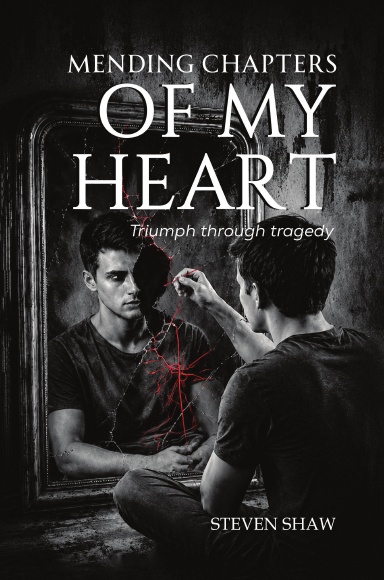
In the raw and vulnerable memoir Mending Chapters of My Heart, the author explores the concept of “repeatable painful scabs of our hearts”—those traumas and fears that follow us, often leading to self-sabotaging behaviors. But the ultimate message of the book is one of radical hope: no matter how a story begins, you have the power to rewrite the ending.
Acknowledging the “Repeatable Scabs”
Before we can choose a new destiny, we must be honest about the one we’ve lived. The author’s journey began in a suburb of Chicago, born into a world of “defining silence” and fear. With an unemotional mother who “hated” him and a father who viewed him as a “failure,” the author spent his childhood hiding in prairies and behind dryers to escape violence.
These early wounds create “scabs” that we often pick at in adulthood. We might push people away because we’ve only known betrayal, or we might sabotage our success because we were told we were “worthless”. Rewriting your ending begins with the “pursuit of truth”—admitting that these things happened and understanding how they shaped your identity.
The Turning Point: Breaking the Cycle
The author’s life was a series of “hushed moments” and “tragic watercolors”. He faced homelessness, the sudden abandonment by his father at an orphanage, and the loss of multiple people he loved. At his lowest, he wondered why he had been born at all if this was what life was meant to be.
However, the turning point in any story of resilience is the realization that while you cannot control what happened to you, you can control how you respond to it. The author notes that “the only fault is blaming everything on what wronged you and not doing something to fix it”.
Strategies for Choosing Your Destiny
How do we move from being “wards of the state” or victims of our past to being the authors of our future?
- Seek Out “Angels” and Mentors: Throughout his life, the author was saved by the kindness of others—teachers like Ms. Luendowski, strangers like Mario who taught him that “running will only keep you running,” and therapists like Melissa who saw his bravery. We cannot heal in isolation.
- Embrace the Power of Time: Healing is not an overnight event. The author emphasizes that “life will get better while the key is only time”. Give yourself the grace to grow and heal at your own pace.
- Lean into the Courage of Pain: A powerful quote by Mary Tyler Moore serves as a lighthouse in the author’s story: “Pain nourishes courage. You can’t be brave if you’ve only had wonderful things happen to you”. Your past hasn’t just given you scars; it has given you a unique brand of strength.
- Accept Your Power: You are the only one with the power to be the person you should be. As the author states in his life motto: “Life is finite, embrace all of its good or bad, and be in every moment for you, you are your own destiny”.
Conclusion
Your history may be a “diary of love, pain, hope, hurt, and survival,” but it is not a closed book. Whether you are currently “stumbling” or “wheezing, trying to recover,” remember that you are still here.
The author of Mending Chapters of My Heart eventually found a way to become a “stronger man—better man” because of his experiences, not just in spite of them. He chose to stop running and start mending. Today, you can make that same choice. Don’t give up on yourself, and don’t give up on love. Your best chapters are still waiting to be written.